
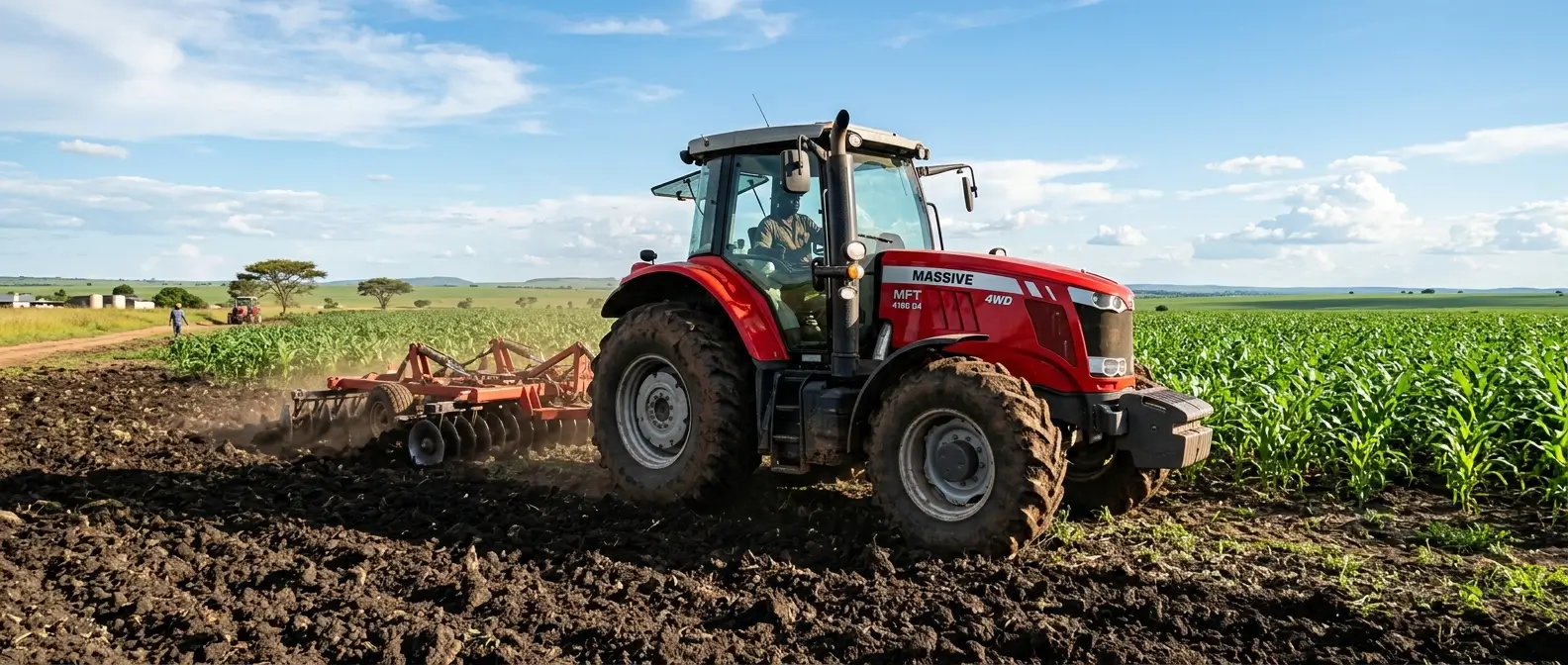
Most Zimbabwean smallholder farms (under 5 hectares) run efficiently on 25–45 HP tractors, while medium-scale operations (5–20 hectares) typically need 50–75 HP, and large commercial farms growing maize, tobacco, or soya often require 85 HP and above. The right horsepower depends on your land size, soil type, and the implements you plan to pull.
Why Does Horsepower Matter for Farming in Zimbabwe?
Horsepower determines how much work your tractor can do, how fast it can do it, and which implements it can safely pull. Zimbabwe’s varied soils—from the sandy veld soils common in the Mashonaland provinces to the heavier clay soils found in parts of Manicaland—place different demands on an engine. Choosing a tractor with too little horsepower leads to slower tillage, engine strain, and premature wear, while oversized tractors waste fuel and capital that could go toward implements or inputs.
How Much Horsepower Do Smallholder Farms Need?
Smallholder farms working 1–5 hectares are generally well served by 25–45 HP tractors, including compact models or 2 wheel tractors for sale in Zimbabwe and mini tractors. These machines suit market gardening, horticulture, and small maize plots, offering manoeuvrability between rows without the heavy price tag of larger equipment. A walking tractor can be a practical, lower-cost entry point for farmers mechanizing for the first time.
How Much Horsepower Do Medium-Scale Farms Need?
Farms cultivating 5–20 hectares usually require 50–75 HP to comfortably pull ploughs, disc harrows, and planters across larger areas within tight planting windows. This is the range where Massey Ferguson tractors are especially popular among Zimbabwean farmers, thanks to their reliability and ease of local maintenance.
How Much Horsepower Do Large Commercial Farms Need?
Commercial operations above 20 hectares, particularly those growing maize, tobacco, or soya at scale, typically need 85 HP or more to run wider implements and combine with combine harvesters during peak season. Higher horsepower also supports heavier farm implements such as multi-disc ploughs, balers, and trailers, reducing the number of passes needed per field.
What Other Factors Affect Your Horsepower Choice?
Beyond farm size, consider soil type (heavier clay soils demand more pulling power), the implements you already own or plan to buy, and your budget. According to Tractors Zimbabwe’s buying guidance, matching horsepower to implement weight—not just hectares—prevents both under- and over-investment. See our guide to buying tractors for sale in Zimbabwe for a fuller breakdown.
Frequently Asked Questions
Can one tractor serve both tillage and transport needs?
Yes. Tractors in the 50–75 HP range can typically handle ploughing, harrowing, and towing a trailer, making them a versatile choice for mixed-use farms.
Does horsepower affect fuel consumption significantly?
Generally, yes—higher-HP tractors consume more fuel per hour, so matching horsepower closely to your actual workload helps control running costs.
Should I buy new or used based on horsepower needs?
Either can work; a used tractor in the right HP bracket is often more cost-effective for smallholders, while new tractors suit commercial farms needing warranty-backed reliability.
Still unsure which horsepower suits your farm? Contact Tractors Zimbabwe on WhatsApp at +263712611911 or visit our contact page for personalized advice and current stock.
\n\n—\n—\n\n
Tags: agriculture, farming, machinery, spare parts, tractors, zimbabwe